
News
Search
-
Find By Category
- Admissions (13)
- Air Force ROTC (3)
- Alumni (90)
- Army ROTC (5)
- Athletics (38)
- Awards and Rankings (130)
- Biology (21)
- Business (45)
- Campus Ministry (11)
- Campus Safety (11)
- Chemistry (12)
- College of Arts & Sciences (48)
- Commencement (23)
- Communication Studies (23)
- Development (31)
- Dundon-Berchtold Institute (8)
- Education (19)
- Engineering (86)
- English (6)
- Environmental Studies (10)
- Franz Center (18)
- Garaventa Center (14)
- Health Center (9)
- History (6)
- Honors Program (0)
- Human Resources (5)
- International Languages & Cultures (10)
- International Student Services (2)
- Library (7)
- Mathematics (13)
- Moreau Center (8)
- Nursing (50)
- Performing & Fine Arts (19)
- Philosophy (3)
- Physics (6)
- Pilots Prevent (113)
- Political Science (5)
- Portland Magazine (221)
- President (65)
- Psychology (3)
- Recreational Services (6)
- Residence Life (21)
- Shepard Academic Resource Center (4)
- Social Media (14)
- Social Work (4)
- Sociology (5)
- Student Activities (7)
- Student Affairs (4)
- Study Abroad (7)
- Theology (7)
- Undergraduate Scholarly Engagement (19)
-
Find By Date
- 2026
- 2025
- 2024
- 2023
- 2022
- 2021
- 2020
- 2019
- 2018
- 2017
- 2016
- 2015
University of Portland Chemistry and Physics Students Team Up to Explore Energy Conversion and Storage
Chemistry
Awards and Rankings
Physics
December 20, 2022
National Science Foundation Grant Aims to Strengthen STEM Identities through Scientific Research
 Supported by a $396,000 grant award from the National Science Foundation (NSF), University of Portland students and faculty have launched a three-year research project to mitigate climate change by improving the conversion and storage of electrical energy.
The NSF award brings together the UP departments of chemistry and physics to study electricity flows and how to store energy at a higher power than conventional battery technologies. The project will expose UP students to improved upper-division research laboratories and extended training opportunities.
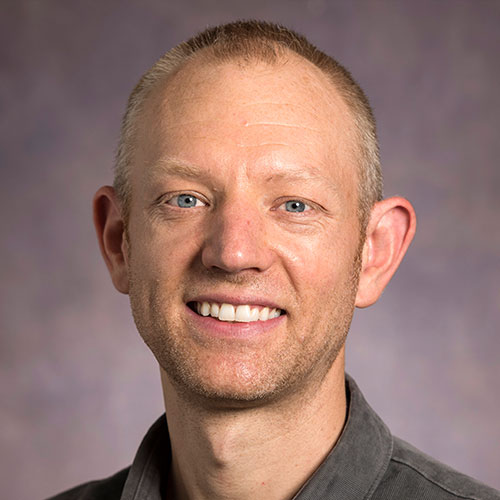
Dr. Paige Hall, a UP chemistry professor, teamed up with physics professor Nelson Coates as principal investigators in the NSF grant. Hall and Coates tout the “high-impact experience” of engaging in undergraduate research for the first time, especially for students from backgrounds historically underserved by higher education. They’re using materials and experimental techniques that are more accessible to students just beginning to form their STEM identities.
“There’s something really special about the shift in focus that can happen when students go beyond the textbook to do purposeful, scientific research,” says Coates. “It can be incredibly empowering for students to apply their diverse experiences to work on authentic questions whose answers will help solve important problems.”
"The ability to work on cutting-edge research during my undergraduate education has been vital in my development as a researcher," says Zion Irving-Singh, a first-generation college student majoring in chemistry. “UP’s tight knit, learning-focused community instills a diversified knowledge base in students. The pairing of cutting-edge research with UP's holistic education gave me the necessary experience for an internship at NASA.”
Research supported by the NSF award will be conducted in collaboration with Reed College. A combined full award of $662,000 includes summer salary support for 13 UP undergraduate students over the next three years.
