December 2025
A New Way to See Van Gogh
Anna Singley ’26 uses a mathematical model to explore a link between Van Gogh’s paintings and his mental health.
- Story by Emily Nelson ’19
Photos by Chris Brecht
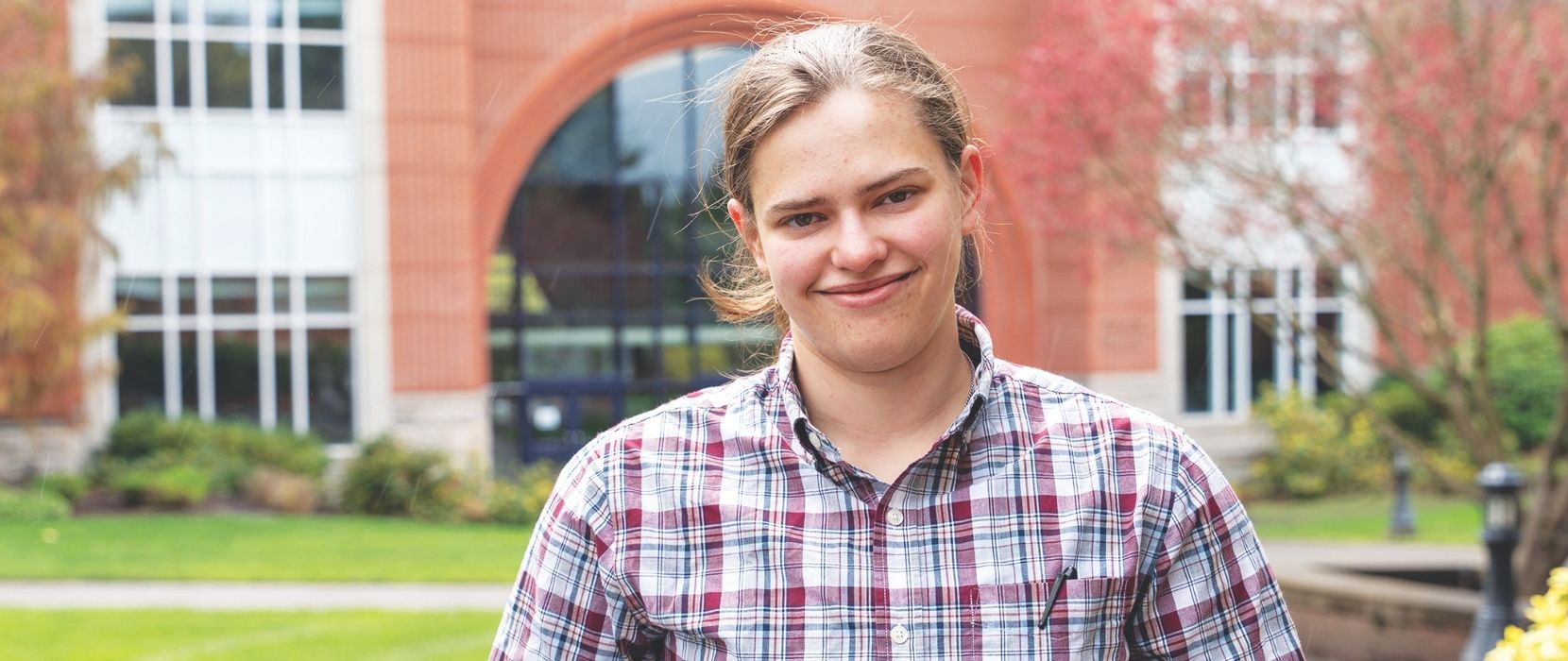
“EVERY BRUSHSTROKE TELLS a story.” It’s a trite cliche in the art community—the idea that every detail, no matter how minute, offers the viewer a glimpse into the painter’s inner world. But like most cliches, there might be some truth to it—at least, that’s the driving thesis behind math major Anna Singley’s groundbreaking research project that dives deep into the work and mental health of Vincent Van Gogh.
Singley ’26 came to the research in a roundabout way. As an intern at the Los Alamos National Laboratory in New Mexico, she worked alongside epidemiologists on a mathematical model that sought to find patterns and common variables in the mental health struggles of veterans. The goal was to be able to better identify markers of potential mental health risks among this population. But Singley was interested in expanding the model’s capabilities.
So she brought her work back with her to The Bluff. She connected with her Philosophy of Art professor, Jessica Logue, who suggested that the work of Vincent Van Gogh might be a good subject through which she might put her math model and epidemiological lens to a new test. A vanguard of the Post-Impressionist movement, Van Gogh’s artwork is arguably some of the most celebrated and recognizable in human history, and his mental health struggles and tragic death are equally well-known and well-documented.
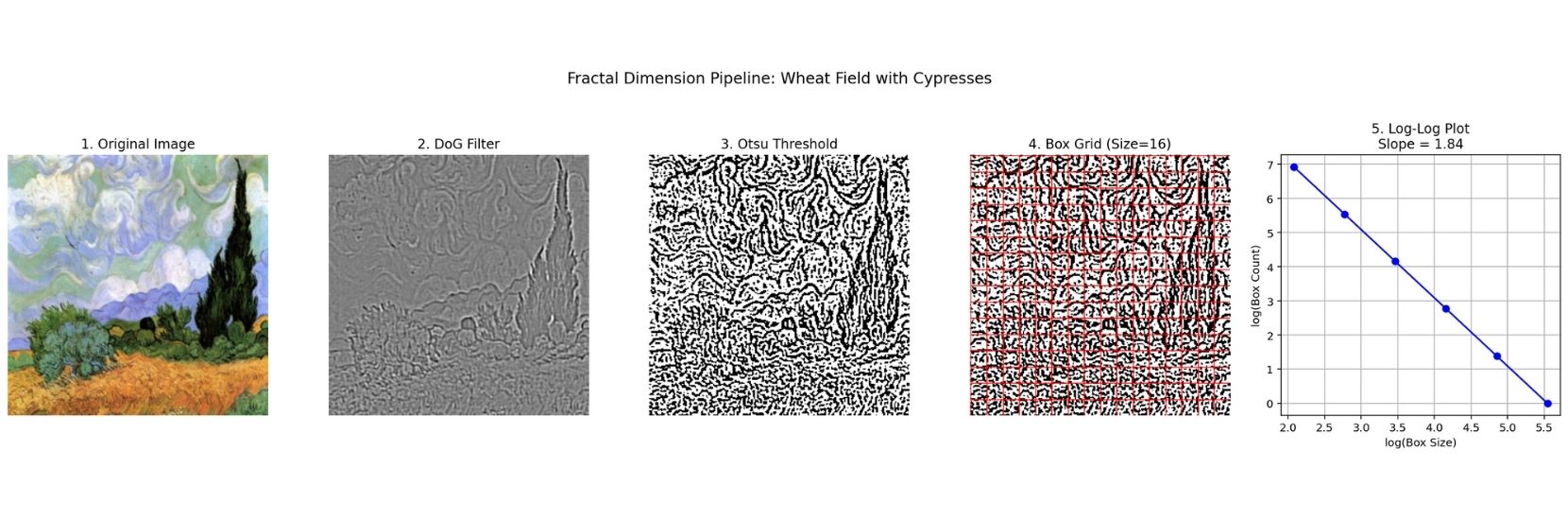
A painting by Van Gogh (left) and corresponding fractal dimension imaging from Singley's research, analyzing brushstroke patterns
With help from the Van Gogh Museum in Amsterdam, Singley and her partners reviewed high-definition scans of over 2,500 of Van Gogh’s paintings, drawings, and sketches, alongside his roughly 900 letters and remaining writing samples. “We took all the letters and paintings, the sketches and the drawings, and we pulled out every individual brushstroke and pencil mark to analyze,” Singley says. Then they turned to the model to see what they could find. By scrutinizing each brushstroke over a period of time, could this mathematical framework, created to identify key warning signs of mental health distress in modern-day veterans, also detect similar signs in the work of a nineteenth-century painter?
The answer, it turns out, is yes, but it took an incredible amount of detailed analysis—and roughly three years of work—to reach that conclusion. They found that there was a correlation between his documented periods of mental health distress and a change in his brushwork.
Of course, the discoveries from Singley’s research won’t do much for Vincent Van Gogh himself, but they offer a potential new method of tracking mental health and finding new markers of risk. And since the project sits at the intersection of mathematics, psychology, neuroscience, and art, there’s no telling how these findings could influence and inspire future research. Singley says the project’s results have promising applications to future art therapy analysis or preventative health care, for example.
And Singley’s not planning on slowing down. Between her time at Los Alamos and wrapping up four years on The Bluff, she’s currently the first author on four research projects and is in the process of applying for grad school. Her plan is to pursue a PhD, with a continued focus in epidemiology—and from there, who knows? As this project has shown her, there are no limits to what mathematics can uncover about our world.
EMILY NELSON ’19 is UP’s marketing project specialist.